

As reported by The Guardian and mercifully few other outlets, the Lancet is making another attempt to popularise the insane diet of a Norwegian billionaire vegan. The EAT-Lancet diet is back and it has been only slightly modified since it became a global laughing stock in 2019. It recommends up to 15 grams of red meat per day (half an ounce) if you must. The chicken ration is somewhat more generous at 30 grams, but still only amounts to one and a half nuggets. You can have fish, but only a quarter of a fillet a day, and you should limit yourself to 50 grams of potatoes, the equivalent of a quarter of a baked spud. Egg consumption is capped at two or three per week. Mostly, you should stuff your face with tree nuts, peanuts, legumes and whole grains.
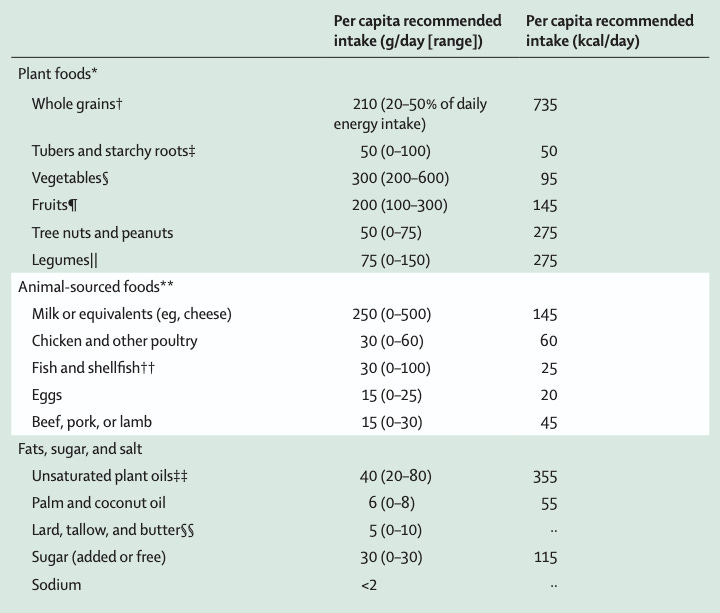
This would be all very well if the EAT-Lancet Commission wasn’t calling for an “urgent, comprehensive approach to food systems transformation” based on its spartan and scientifically dubious fad diet. A lavishly funded lobbying effort has been underway for the last six years to get the diet accepted at the highest levels of non-democratic government.
Cross-sectoral coalitions—including actors from public institutions, private sector, and civil society—are essential to achieve synergistic governance. These coalitions should align with existing and emerging global frameworks, such as the Paris Agreement, the Convention on Biological Diversity, and the post-2030 Sustainable Development Goals agenda.
… The transformation needed to achieve healthy, sustainable, and just food systems is huge, and will require global efforts from individuals, organisations, and governments at all levels of society.
Don’t be distracted by the management jargon (“synergistic governance,” etc.). The EAT-Lancet Commission makes no secret of its intention to force a near-vegan diet on the world’s population and it wants to radically change your lifestyle through coercion and taxation. To comply with their extraordinary demands, the UK would all have to cut meat consumption by 80 per cent and massively increase its consumption of beans, lentils, soy and nuts. This is not going to happen voluntarily and the committee knows it. Its 2019 report called on politicians to do more “choice editing” (ie. banning) and the new report reiterates their demands for more taxes on food, including “health-directed taxation of meat products” as well as more advertising restrictions.
In 2019, they stated bluntly that they wanted to “restrict choice” or, better still, “eliminate choice”. That invited an inevitable backlash and much mockery, and so the new report is more delicately written in parts. They are no longer explicitly recommending “rationing on a population scale” and they are no longer explicitly saying that their “priority is to offer less than what is currently offered by reducing portions, choice, and packaging”. But the agenda is exactly the same: limit, restrict and tax.
None of this will happen overnight. Perhaps there is an element of trying to shift the Overton Window with some of the more extreme demands, but a number of the report’s policy recommendations have already been adopted by the British government. We have a sugar tax, for example, and advertising for tasty food will soon be severely restricted online and on TV.
Even by the standards of Britain’s super-nanny state, the EAT-Lancet report represents a draconian step change. To those who ask “where will it end?”, I say just read the report. A militant coalition of vegetarians, environmental activists and health campaigners have put their cards on the table and this time you won’t be able to say you weren’t warned.