

News you might have missed
Appeasement never works
Suntory, the soft drinks firm, couldn’t wait to take the sugar out of Ribena and Lucozade in 2016. Their CEO, Peter Harding, recalled “being stared at, at the school gates by other parents. Jamie Oliver was beating me up, so were other celebrities, NGOs and the media”, so he decided to be a good corporate citizen and degrade his biggest brands. None of this had anything to do with the sugar tax being announced or artificial sweeteners being cheaper than sugar, I’m sure.
Alas, you can’t keep the ‘public health’ lobby happy for long and now the government is telling the industry that they need to take even more sugar out if they want to keep advertising their products. This week, Suntory’s Head of External Affairs and Sustainability wrote an article for the pay-to-play website Politics Home in which he pleaded with the government to reconsider.
The proposed model would effectively mean only drinks containing less than 0.9g of sugar per 100g would not face heavy restrictions on advertising and promotions, potentially reclassifying products that have already been substantially reformulated.
Businesses like ours have invested significantly to support people to live healthier lives. Moving to a new model not only moves the goalposts on that progress, requiring further reformulation, but it also restricts how products can be promoted, reducing value for consumers.
It is a petty and vindictive move by DHSC but I’d have more sympathy if companies like Suntory had put up more of a fight to begin with. Coca-Cola were the only soft drinks firm to hold the line.
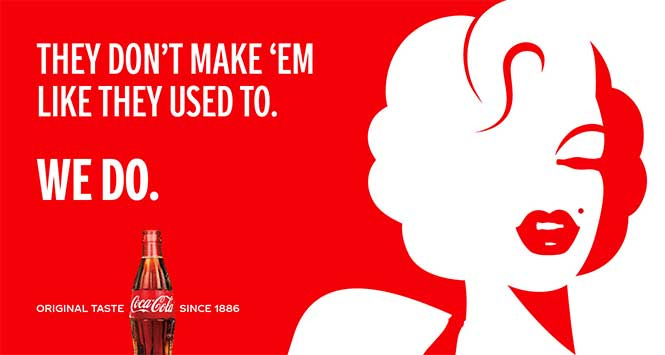
The best response from Suntory would be to put all the sugar back in.
Belgium’s slippery slope
The Belgian government passed a law in May to put warnings on alcohol advertisements saying ‘Alcohol is harmful to health’. Not ‘Alcohol can be harmful to health’ or ‘Excessive drinking is harmful to health’, but ‘Alcohol is harmful to health’.
Belgian Brewers, a trade association, has now published an open letter with more than 1,000 signatures opposing the measure. The Flemish Centre of Expertise on Alcohol and Other Drugs has been lobbying for the new warnings (the phrase ‘alcohol and other drugs’ is a massive red flag for prohibitionism). Its director, Kathleen Peleman, said:
“The core of this message is that alcohol is damaging to your health,” Peleman adds. “Not just for the small group that struggles with addiction, but for everyone who drinks.”
That is indeed the message and it is clearly untrue. The anti-alcohol lobby are copying the anti-tobacco blueprint again. They want to portray alcohol as harmful at any level. That is why activist-academics such as Tim Stockwell devote to much energy to torturing the evidence to erase the health benefits of moderate drinking. This is not an arcane academic dispute. ‘No safe level’ is a crucial rhetorical device for taking alcohol down tobacco road.
The government wants to force the Belgian booze industry to put information on their adverts that is misleading at best and a lie at worst. It will not end there. The industry should take legal action before this gets out of hand.
HMRC tries to get real
HMRC is finally trying to do something about its hopeless estimates of the size of the illicit tobacco market. The title of a document that has not yet been made public - The Tobacco Tax Gap: Improving Tax Gap Statistics Through Wastewater Analysis - indicates that it intends to follow Australia’s lead and look for nicotine in sewage. When the Australian Bureau for Statistics did this, it estimated that 80% of tobacco sold Down Under was illicit. In the House of Commons, the health minister James Murray was asked how the study will differentiate nicotine from tobacco and nicotine from vapes (or pouches or heated tobacco or patches, etc.). He replied:
The methodology will distinguish between tobacco and nicotine consumption by analysing different chemical metabolites present in wastewater samples.
Specifically, tobacco consumption will be measured using the metabolites anabasine and anatabine, while nicotine consumption will be measured using cotinine and its metabolite 3-hydroxycotinine.
It’s a nice methodology. Meanwhile, the Co-op supermarket - which is losing out to the illicit trade - has found that 36 per cent of UK smokers have bought illicit cigarettes, rising to 49 per cent among those aged 35-44. Time is running out for the black market deniers.
The fruits of academia
Oops!
A study in Tobacco Control finds that smokers who switch to higher-nicotine vapes are more likely to quit smoking for good.
Among those reporting dual use at baseline, nearly half continued dual use at follow-up regardless of nicotine concentration. However, those using higher nicotine concentrations (≥1.8%) were more likely to either switch to exclusive e-cigarettes or quit entirely indicating greater harm reduction than those using low-nicotine or no-nicotine products.
Those of us who switched from smoking to vaping have known this all along and said so before the EU stupidly banned higher-nicotine juices in 2016.
Building on ignorance
In Korea, some researchers have managed to find some smokers who correctly believe that e-cigarettes and heated tobacco products are safer than smoking cigarettes.
Lower perceived harm of HTPs and ECs relative to cigarettes was common among Korean adults who smoked cigarettes, especially among dual-product users and those exposed to marketing.
Good stuff. So what do the authors suggest happen next?
Stronger advertising regulation, standardized warnings, and comparative risk education are needed to address misperceptions about relative harmfulness and support cessation.
If you are alarmed by the public being well informed and want policies that will make them more ignorant, maybe you’re the bad guys?
Seen elsewhere
Gambling guru Dan Waugh rips apart more anti-gambling garbage from the Social Market Foundation (which is funded by the three-card philanthropist Derek Webb). The SMF are claiming that fruit machines cost society £2.33 billion a year and want to hike up the rate of machine gaming duty to compensate for it.
Since the government’s upper estimate for the social cost of all gambling is only £1.77 billion a year (much less than gambling taxes bring in), this seems hard to believe, but that’s where the Gambling Commission’s dodgy new gambling survey comes in. By attracting a disproportionate number of prolific gamblers, the Gambling Survey for Great Britain produces a problem gambling prevalence estimate that is seven or eight times higher than all the other surveys conducted in the UK. As Waugh explains, the SMF have basically taken the government’s figure - devised by the Office for Health Improvement and Disparities (OHID) - multiplied it by seven and then divvied up the cost by the proportion of machine gamblers who are supposedly problem gamblers.
Every variable is this calculation is complete bollocks. The GSGB survey’s problem gambling estimate is demonstrably wrong, OHID’s cost estimate is rubbish and the SMF’s methodology for apportioning costs to people who play one-arm bandits is laughable. You can’t just assume a problem gambler is a problem gambler because of the game they play. Problem gamblers play lots of different games. The SMF’s system is a recipe for double-counting, treble counting and worse.
Following the SMF’s methodology (using a cost per ‘problem gambler’ of £6,253), the economic costs of the National Lottery in that year therefore exceeded £6.2bn – and around 2,580 suicides in England (or more than half of all such deaths) were (again according to SMF logic) caused exclusively by playing its games.
What a bunch of clowns.
From the desk of Dr C. J. Snowdon
It’s amazing how many stats cited by anti-gambling campaigners are junk. At The Critic last week, I looked at the claim that Britain has 80,000 children are “gambling addicts”. It’s based on a survey in which some children are blatantly lying and others simply don’t understand the questions.
Most striking were the six kids who claimed to have gambled in every conceivable way in the last week, including visiting casinos, visiting seaside amusement arcades, playing bingo online, playing bingo in a licensed bingo clubs, gambling on machines in a licensed betting shop, betting on e-sports and gambling in an online casino. One of them was only twelve years old.
… The YPGS also asks whether the kids have ever been prompted to gamble by advertising, presumably because the Gambling Commission wants ammunition to justify a ban. Across the last three surveys, 585 children said that they have. This is a relatively modest 5 per cent, but 5 per cent is arguably more than can be attributed to a few mischievous individuals at the back of the class. The peculiar thing is that the majority of them — 323 kids — said that they have never gambled. The most plausible explanation for this anomaly is that they simply don’t know what the word “prompted” means.
Excellent as always. My favourite line in your newsletter this week is 'Every variable is this calculation is complete bollocks.'
If there was an "Honesty in Government" party they would be overwhelmingly popular. But then they might find it difficult to keep their MPs.